


Moose Labs vs. Glass Filter Tips: What’s the Difference?

A quality weed filter or tip is one of the most useful accessories for smoking joints, blunts, and pre-rolled cones. Popular options include glass tips, paper tips, and silicone filters, such as the Moose Labs MouthPeace.
Like many smokers, you may be wondering which one is actually worth buying.
Below is a closer look at Glass tips vs. Silicone filters, how each works, and which is better.
Quick Answer: Silicone Filters and Glass Tips Are Built for Different Experiences
Glass tips keep your joint or blunt firm, help with airflow, and maintain that familiar smoking feel but dont filter smoke.
Silicone filters with activated carbon are for smokers who are tired of harsh inhales, resin build-up, and sessions cut short by a clogged mouthpiece. The point is to make smoking more comfortable and cleaner for people who care about what they're actually inhaling.
That's the main difference between glass tips and Silicone filters!
If you want real filtration rather than just a clutch, a silicone filter like the MooseLabs Mouthpeace handles the mess without changing how you smoke.
What Is a Glass Tip?
A glass tip is a small, reusable piece placed at the end of a joint, pre-roll, or blunt. It helps with airflow, maintains shape, and gives you something stable to hold while smoking.
That said, glass tips don't filter anything. They work more like a handle than a filtration device, meaning carcinogens, tar, and toxins pass through freely(Bummer!). The upside to that open flow is that cannabinoids and terpenes also come through without interference, so nothing is lost from the flavor profile of your cannabis.
What Is a Moose Labs Silicone Filter?
MooseLabs silicone filters are reusable mouthpieces built for a cleaner smoking session. Inside the silicone casing is either a corn fiber or a triple-layer activated carbon filter that captures unwanted particles from going into your lungs. This makes silicone filters a practical option for smokers who want gentler hits, better flavor, and a bit more peace of mind about what they are inhaling.
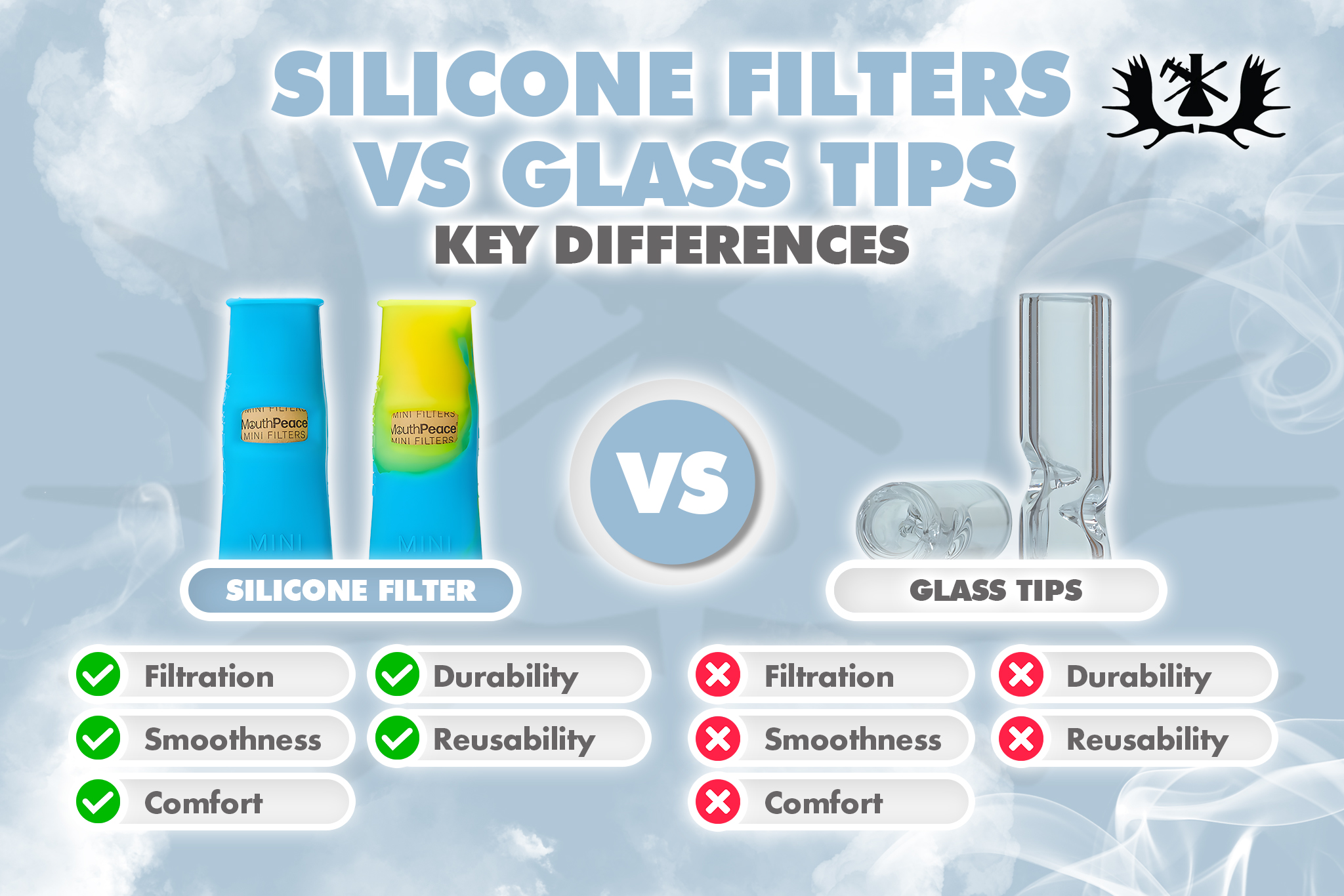 Silicone Filters vs Glass Tips: Key Differences
Filtration
Like we said before glass tips don't filter anything. Smoke travels straight through, along with whatever tar, resin, and combustion byproducts are in it.
On the other hand MooseLabs silicone filters use activated carbon to catch a meaningful portion of those unwanted particles. You still get the cannabinoids and terpenes, but with noticeably less harshness. If filtration matters to you, the silicone filter wins here without much debate.
Smoothness
Because glass tips don't filter smoke, the harshness of each hit depends entirely on what you're smoking and how it's rolled.
Silicone filters with activated carbon tend to produce a smoother draw, particularly toward the end of a joint when resin buildup would otherwise make things rough. For people who find raw smoke too harsh, the difference is noticeable.
Comfort
Glass tips feel familiar. Smoking using a glass tip is smooth, neutral in taste, and doesn't add anything to the smoking experience beyond stability.
Silicone filters are slightly bulkier but designed to sit comfortably in the mouth. Also the softer material is easier on the lips, and the filter does most of its work without you noticing it.
Durability
Glass tips can break if you drop them.
Silicone filters are far more durable and hold up well in a bag, pocket, or smoke kit without much concern. If you're hard on your gear or frequently smoking on the go, silicone is the more practical material.
Reusability
Both options are reusable. The difference is that MooseLabs filters let you swap out the inner filter as it gets used up, so you're extending the life of the whole mouthpiece rather than just rinsing a tip and putting it back. Over time, that makes the silicone filter a better long-term investment.
Who Should Choose a Glass Tip?
A glass tip is a good fit if you prefer smoking with as little interference as possible. It keeps the joint stable, helps maintain airflow, and doesn't alter the taste or draw in any way. If you're not bothered by harshness and don't want any filtration involved, a glass tip does its job cleanly and simply. It's also a reasonable choice if you're smoking high-quality flower and want the full, unfiltered flavor.
Who Should Choose a Silicone Filter?
A silicone filter is worth it if you want a cleaner, smoother experience. The MooseLabs Silicone Mouthpeace catches resin, tar, and other combustion byproducts before they reach your mouth, which makes a difference over the course of a session, especially as a joint burns down and gets hotter.
A Silicone filter from Mooselabs also lets you smoke a pre-roll all the way to the end without burning your fingers or lips. Since you're using more of what you paid for, less goes to waste. Additionally, the silicone filter also strips away some of the harsh residue that can mask the flavor of the cannabis so the terpenes come through more clearly.
And best of all, the Mouthpeace Mini works with vapes and chillums as well. The Mouthpeace Mini tapered shape fits different-sized joints and pipes which makes it a flexible option if you smoke with more than one setup.
Why MooseLabs Stands Out
We are all aware that smoking carries health risks.
Smoking involves combustion and combustion produces carcinogens….
Whether you're using a bong, a pipe, or rolling your own, lighting cannabis creates many of the same byproducts found in tobacco smoke and for people who smoke regularly, that adds up.
MooseLabs makes sanitary smoking products that address this directly.
Our triple-layer activated carbon filters reduce tar and resin intake, and the replaceable filter design means the mouthpiece stays effective over time rather than becoming a buildup point itself. The goal is a smoother draw that doesn't change the feel of smoking, just makes it a bit cleaner. For regular smokers, that's a practical improvement.
Is a Silicone Filter Worth It Over a Glass Tip?
So is a silicone filter worth it?
If you care about smoother, cleaner sessions, YES! A silicone filter actively improves the experience by reducing harshness and filtering out resin and other byproducts that make a session feel rough. A glass tip is useful, but it's a passive accessory. If you want something that does more than just hold your joint in place, a silicone filter from mooselabs is a better option.
Final Verdict: Silicone Filters vs Glass Tips
Glass tips and silicone filters both have their place, but they serve different needs. A glass tip is a simple, reliable option for smokers who want stability and an unaltered draw. A silicone filter with activated carbon is for smokers who want a cleaner, smoother experience without giving up the ritual of smoking. so if you are choosing between the two, it comes down to whether filtration matters to you. For regular smokers who care about what they're inhaling, the MooseLabs Mouthpeace is worth the upgrade.
Try MooseLabs for a cleaner, less harsh session!
Similar Blogs:
Frequently Asked Questions
Do glass tips filter smoke?
No. Glass tips don't filter smoke. They help with airflow and give you a stable grip on your joint or blunt, but smoke, tar, resin, and combustion byproducts pass through freely.
Are silicone filters better than glass tips?
They can be, particularly if you desire a smoother and cleaner smoking experience beyond just having a mouthpiece.
Do MooseLabs filters reduce harshness?
Yes, the activated carbon filters inside MooseLabs mouthpieces capture a some of the tar and resin in smoke, which noticeably reduces harshness.
Can you reuse a silicone smoke filter?
Yes. MooseLabs silicone filters are reusable and dishwasher safe, and the inner carbon filters can be replaced, so the mouthpiece stays effective over many sessions. Try out our filter subscription box to keep your sessions clean every month!
What Moose Labs product works best for joints and pre-rolls?
The MouthPeace Mini is the ideal choice for smaller devices like vapes and things like joints, pre-rolled joints, blunts, etc!
Silicone filter vs paper tips vs glass tips?
Paper or cardboard tips (often called roaches) are the most basic option and like glass tips, they don't filter anything. Paper tips are cheap and disposable, and while they help keep the end of a joint open and give you something to hold, that's the extent of what they do. Silicone filters provide the best option for a cleaner, smoother, less harsh hit with less resin and fewer scooby snacks.
Bottom line: paper tips are basic, glass tips are all about airflow, and silicone filters provide a better overall sesh.


SPECIAL FOR OUR BLOG READERS!
CLAIM YOUR
As a valued reader, you deserve more than just great content.
Enjoy 20% off your next tech purchase as our way of saying thanks for sticking with us.
Use Code